
A look at six indicators shows all of them have collapsed from positive growth in April to contraction in September.

A task force formed by Prime Minister Manmohan Singh on Thursday discussed steps to enhance credit to MSMEs, which contribute 45 per cent to the country's industrial production.

Congress said Modi once again "quickly and meekly" caved in to the pressure exerted by Rahul Gandhi.
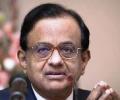
Also on agenda is rising credit flow to MSMEs & farm sector.

With the world's worst outbreak of COVID pandemic stalling a nascent economic recovery, the government has begun assessing the impact of the second wave of infections on different sectors and may look at providing support at an appropriate time to segments requiring fiscal help. Some of the economic indicators, including the Goods and Services Tax (GST) collections, still provide confidence and incoming data will throw some more light on the state of the economy, sources said. Services sectors like hospitality, tourism and aviation which had just started recovering were hit hard by the second wave of COVID, the sources said, adding these segments might need some support on an urgent basis from the government.

Union Minister Nitin Gadkari said opening of transport and highways will go a long way in instilling confidence among the public and cautioned towards maintaining social distance and adopting all safety measures like hand wash, sanitizing, face masks, etc while operating buses and cars.
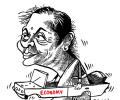
While the situation Sitharaman finds herself in may not be that good, how does it stack up against her three immediate predecessors Pranab Mukherjee, P Chidambaram and the late Arun Jaitley?


With Narayan Rane, the BJP looks to expand its footprint in Mumbai and Konkan. But a perceived self-goal by him may have galvanised the restive Shiv Sena cadre and voters to coalesce around their party. Dhaval Kulkarni reports

Fitch Ratings on Monday said the shock to economic activity from the latest wave of COVID-19 pandemic will be less severe than the one in 2020, but recovery is likely to be delayed as economic activity dropped in April-May. The global rating agency said there are growing indications that the latest wave of COVID-19 infections will add to risks among financial institutions (FIs) and anticipates that the Reserve Bank of India (RBI) may introduce additional measures to support the financial sector if indications of economic stress mount.

Easy financing, including grant of tax exemption, being considered to provide early stage funding.

Indian regulators have identified certain groups as 'financial conglomerates' and they are being monitored closely for any systemic risks they may pose.

Is the worst over for Indian banks? The past two years saw them ride on treasury trades as deposits soared and credit growth dipped sharply. Gross and net non-performing assets (NPAs) moved south, and the provision coverage ratio (PCR), capital buffers, and profitability indicators are back at pre-pandemic levels. So, what's the plot ahead?

The government propagandists should refrain from premature celebrations and misplaced euphoria: Congress.

Auto-debit payment bounces have gone up for the second consecutive month in May, emphasising the stress building up due to a halt in economic activities as authorities lock down various parts of the country to stop the spread of the virus in the second wave. According to the National Automated Clearing House (NACH) data, in May, of the 85.7 million transactions initiated, 35.91 per cent, or 30.8 million transactions, failed.

For people at the bottom of the pyramid, which I would rather address as mass market or emerging class; the primary challenge in accessing banking services are not just affordability but applicability and accessibility of services.

In the last of a six-part series Sanjay Jog discovers that if the government and beedi employers don't act now, there could be social unrest soon.

Nandan Nilekani-led task force on an Aadhaar-enabled unified payment infrastructure has recommended setting up a network of one million interoperable micro-ATMs across the country.
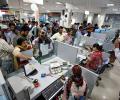
Amid slowdown blues, the government has unveiled a raft of measures over the past few months aimed at improving liquidity in the system, moderating interest rates as well as credit growth apart from addressing stress in the NBFC sector.

As the government plans to take sector-specific steps to tackle the slump, Finance minister Nirmala Sitharaman will soon hold talks with representatives from various sectors to get and take steps so that the confidence of those sectors can be restored.

The government on Friday proposed setting up a Rs 5,000 crore venture fund with SIDBI to enhance availability of equity to micro, small and medium enterprises.
.jpg)
Single-brand retailers are also allowed to take e-commerce route for such trading.

Shadow of elections may overshadow political consensus at GST Council meetings.

According to a communication by the ministry to the heads of PSBs, it will be a bottom-up consultative process from the branch level onwards which will involve discussions at the branch or regional level, state level and national level.
Finance ministers from Congress-ruled states say they have alerted the Centre about the problems in GST for several months, but it is only now with the Gujarat assembly election around the corner that the Modi regime has started heeding these suggestions.

India needs a place where all regulators could gather and function as in a war room.

Full list of the rejigged Union Council of Ministers

The government will take special efforts to ensure adequate credit flow to underserved areas -- the eastern states and Jammu-Kashmir, he added.

DoP has 25,000 departmental post offices and 1,30,000 rural post offices across the country.

The Bills are primarily aimed at helping the MSME sector and small traders, Finance Minister Piyush Goyal said while introducing these in the Lok Sabha

Finance Minister Nirmala Sitharaman on Monday presented the Budget for 2021-22 in the Lok Sabha that is expected to provide relief to the pandemic-hit common man as well as focus more on driving economic recovery through higher spending on healthcare, infrastructure and defence amid rising tensions with neighbours, As India emerges from the COVID-19 crisis, the ninth Budget under the Modi government, including an interim one, is widely expected to focus on boosting spending on job creation and rural development, generous allocations for development schemes, putting more money in the hands of the average taxpayer and easing rules to attract foreign investments.

In an affidavit filed by Union finance ministry on behalf of the Union of India, it said that the relief to all borrowers in respect of compounding of interest during the period of moratorium would be admissible to the categories specified irrespective of whether the borrowers had availed the moratorium or not.

Ajit Mishra, vice president, Research, Religare Broking, answers your queries.
To minise wasteful administrative costs, number of enterprises in strategic sectors will ordinarily be only one to four; others will be privatised/merged/brought under holding companies, she said.

What will be its impact on the banks's balance sheets? Since banks need to provide for 10 per cent of the loans restructured, they would need Rs 50,000 crores to Rs 80,000 crore for this purpose, notes Tamal Bandyopadhyay.

A new logo, colour and tagline were unveiled last month.

'The IPO window has been more or less open since the new government in 2014.'
The protocol aims to "democratise" lending, reduce costs of credit, and ensure accessibility of credit to small companies and street vendors, according to Nandan Nilekani.

The government on Tuesday extended the deadline for filing income tax and GST returns, raised the threshold of default that could trigger insolvency of a company, and waived charges on cash withdrawals from ATMs of other banks as a precursor to a broader stimulus package for the economy distressed by the coronavirus outbreak.

Sources said much has been done to ease the tax burden of the middle classes in the last five years, and that such a measure affects only a limited segment of people when the focus should be to put money in rural areas. Archis Mohan reports.
 © 2026 Rediff.com - Advertise with us - Disclaimer - Privacy Policy - Sitemap - Feedback - About us - Terms of use - Grievances